4 hr
Osborne House Admission Ticket, Isle of Wight
- Entry ticket
- Mobile voucher
- Valid same day
- Free cancellation
Osborne House — Queen Victoria's Seaside Palace, Reserved Entry
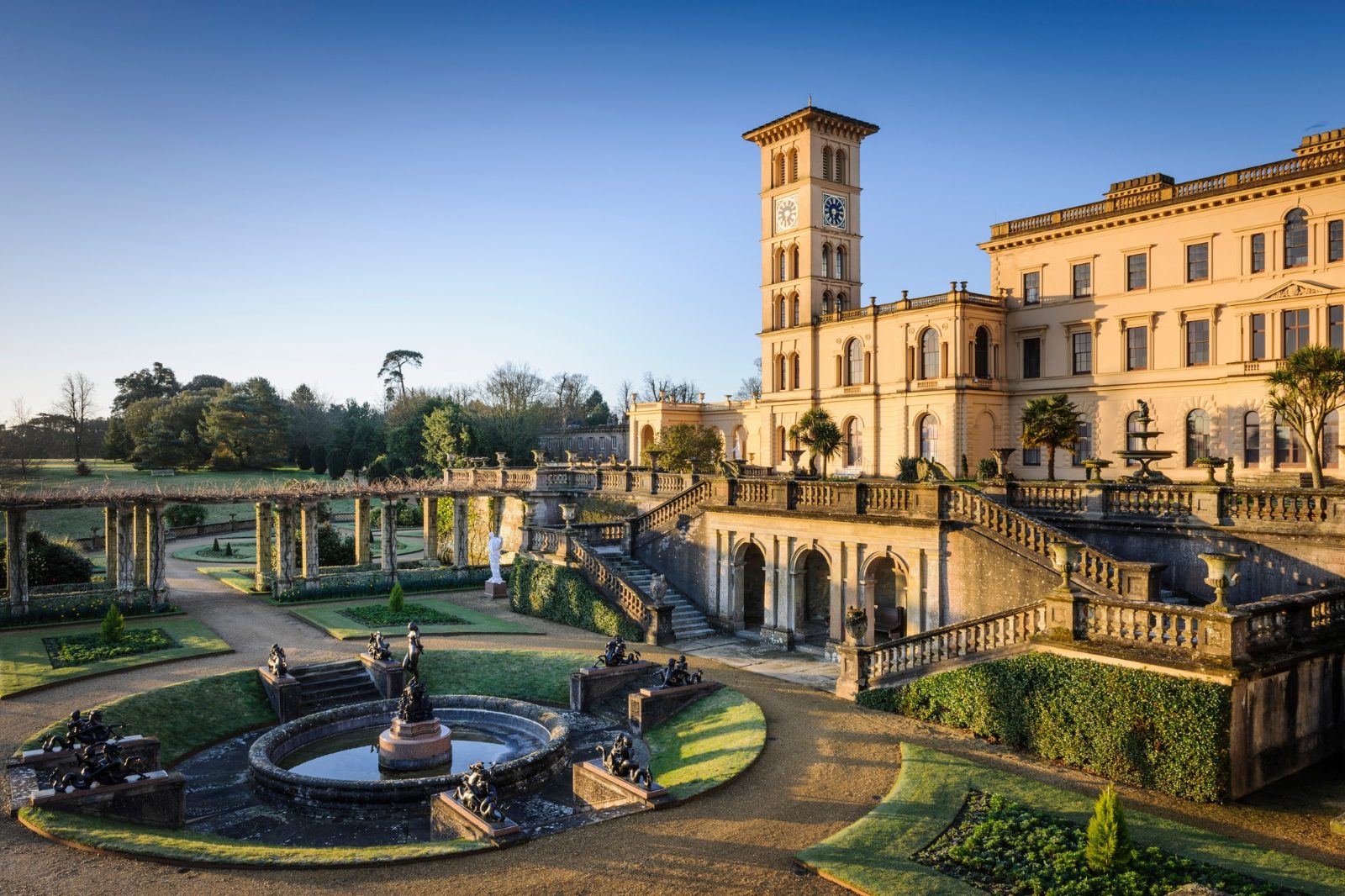
Italianate towers above the Solent, a queen's private shore.
Compare fares, pick the fit — all bookings are mobile-voucher and eligible for free cancellation where shown.
4 hr
14 hr
72 hr
| Experience | From | Duration | Rating | Transfers | Guide | Free cancel. | Price | |
|---|---|---|---|---|---|---|---|---|
|
Standard Entry
Most popular
Osborne House Admission Ticket, Isle of Wight
|
— | 4 hr | ★ 4.6 | — | ✓ | ✓ | €24 | Book → |
|
Guided Experience
Isle of Wight Day Trip from London with Osborne House
|
London | 14 hr | ★ 4.5 | ✓ | ✓ | ✓ | €128 | Book → |
|
Guided Experience
Isle of Wight & Southern Coast 3-Day Tour from London
|
London | 72 hr | ★ 4.2 | ✓ | ✓ | ✓ | €632 | Book → |
Worth it if you commit half a day
Osborne House Tickets cost 27.50 GBP on the day, and that single price covers far more than the state apartments. You get Victoria and Albert's private rooms, the Durbar Room, the terraced Italianate gardens, the walled garden, the Swiss Cottage where the royal children played, and the walk down to the private beach with its restored bathing machine. Priced per attraction, that is closer to four sites than one. Booking through the English Heritage site in advance usually undercuts the walk-up rate, so paying 27.50 GBP at the gate is the most expensive way in. The value splits cleanly. Turn up for a quick highlights loop of the house and you will feel the price. Walk the estate properly — grounds, cottage, shoreline — and the maths works. An East Cowes landmarks day that skips the beach and the gardens leaves most of what you paid for unused, which is the single most common way visitors overpay here.
Bottom line: Book Osborne House Tickets online, arrive between 10:00 and 12:00, and give the estate the full morning — do that and 27.50 GBP is fair money.
Hand-picked experiences loved by thousands of travelers
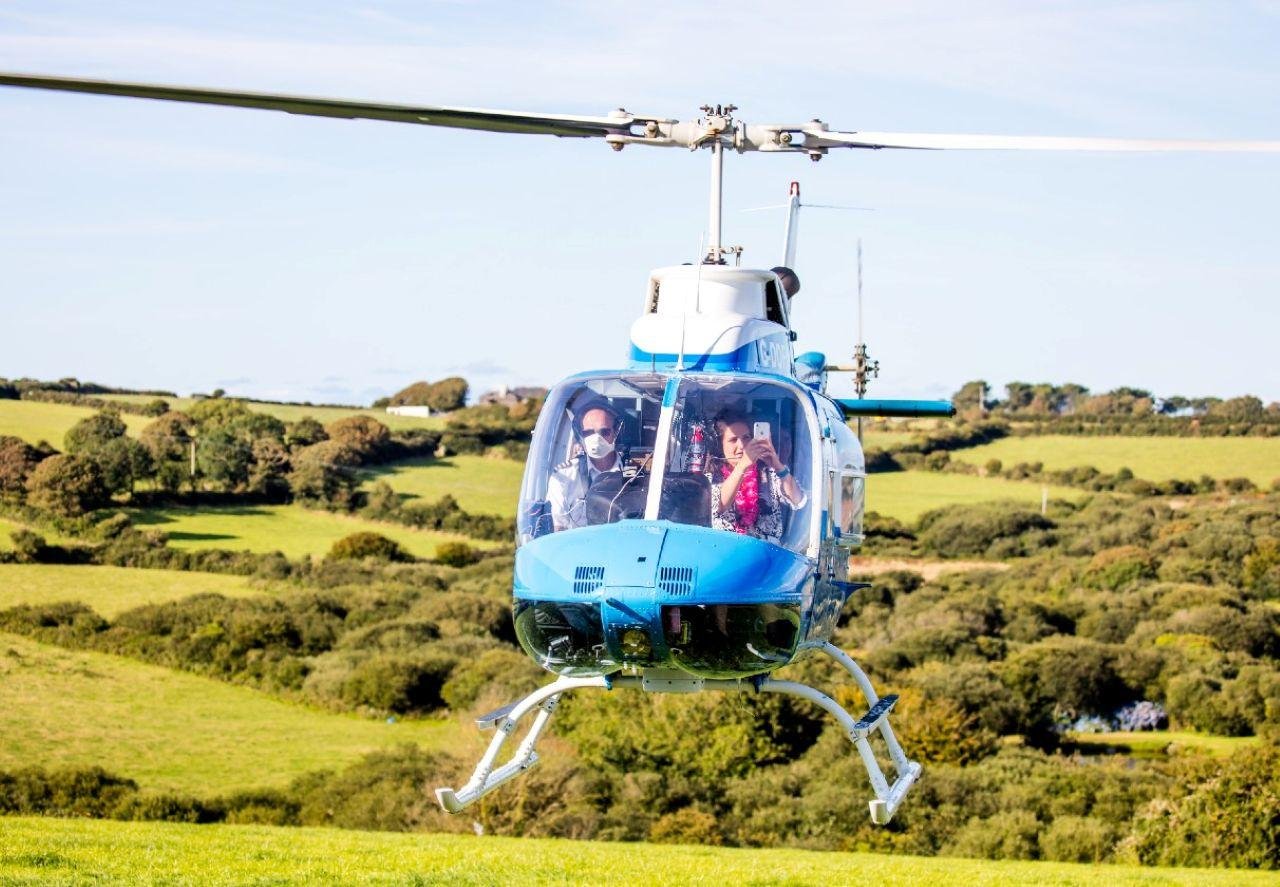
Approx. 10-15 minutes flight
Free Cancellation
A 6-mile helicopter soar over St Ives Bay's golden coves, cliffs and turquoise water.
Check in at the visitor entrance on York Avenue and collect a house plan before the first tour slot.
Walk through the reception rooms and Council Room before ascending to the first-floor private apartments.
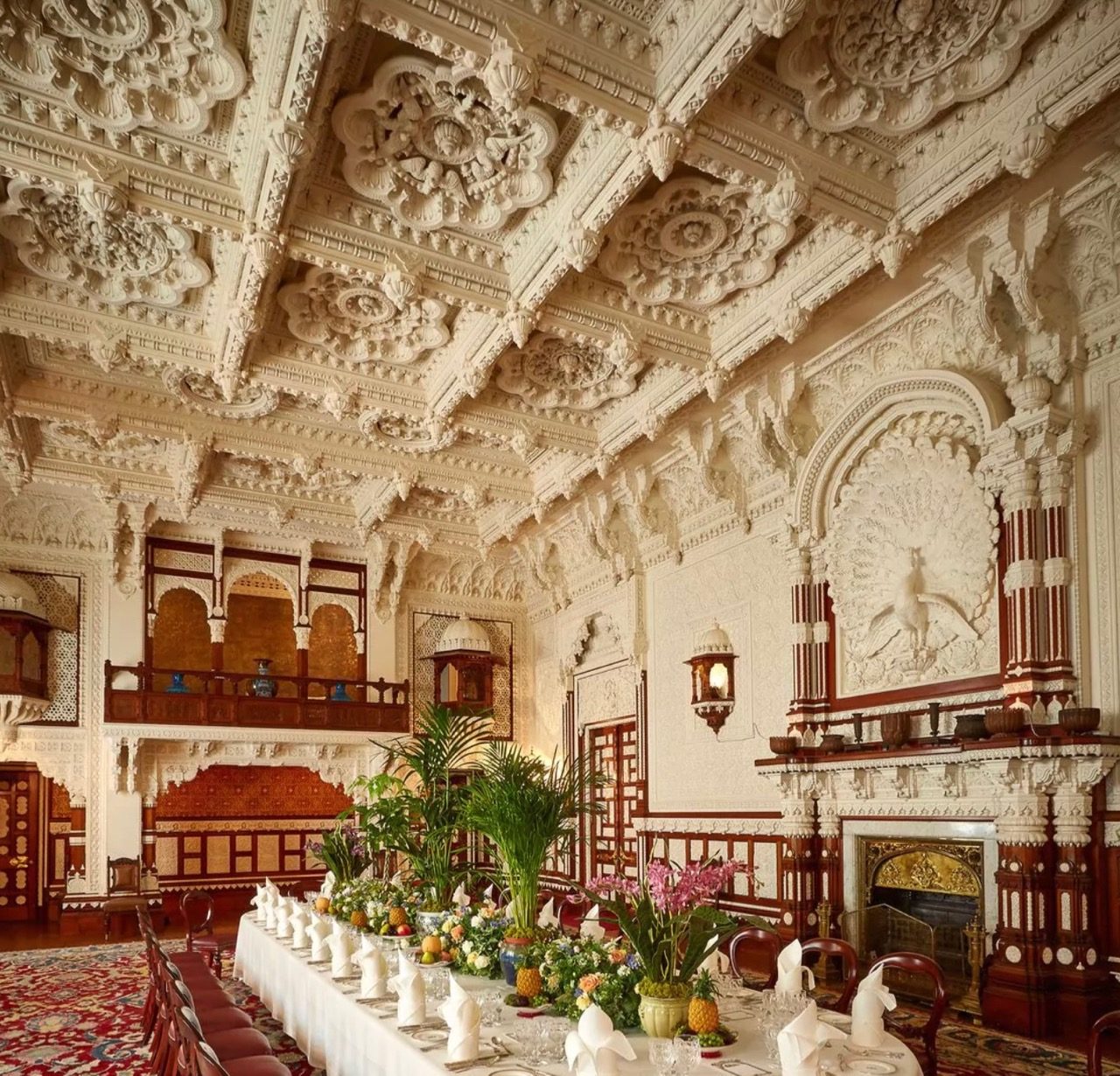
View the Indian-style banqueting hall added in 1890-91 with plasterwork by Bhai Ram Singh.
Descend through the Italianate terraces toward the walled garden and views over the Solent.
Walk or take the courtesy mini-bus to the Swiss Cottage, museum and private beach used by the royal children.
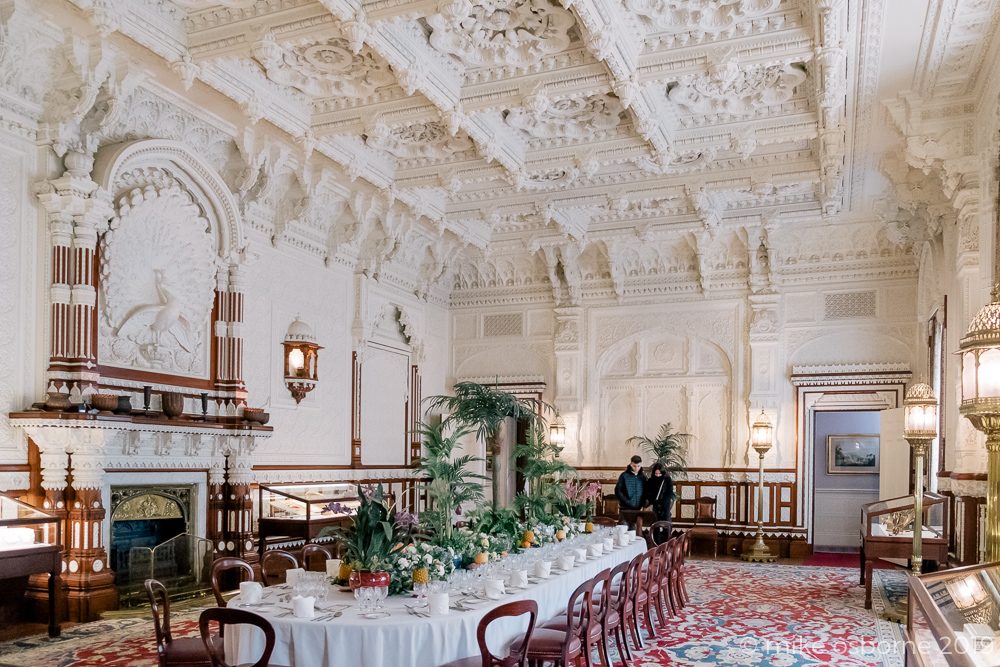
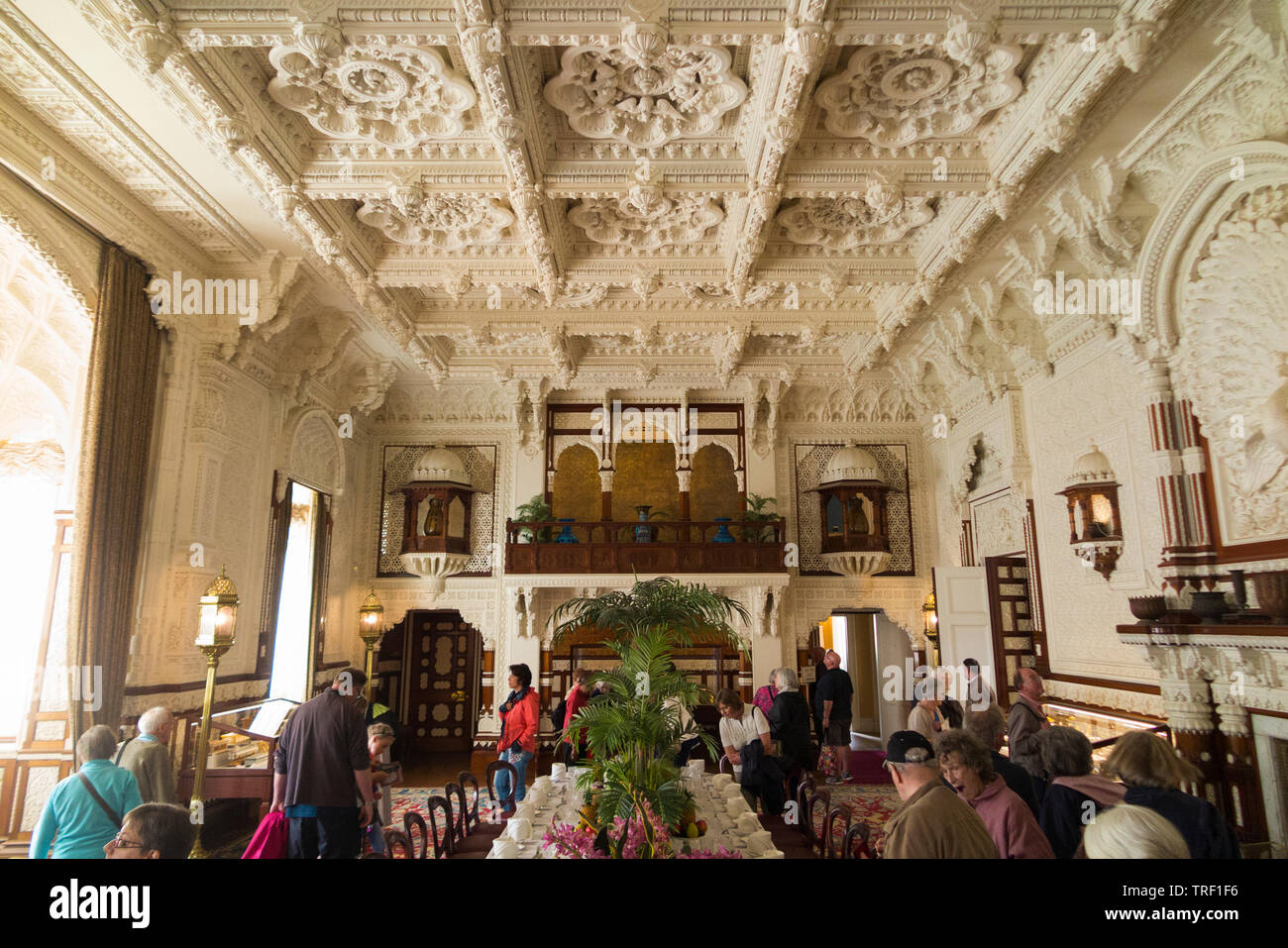
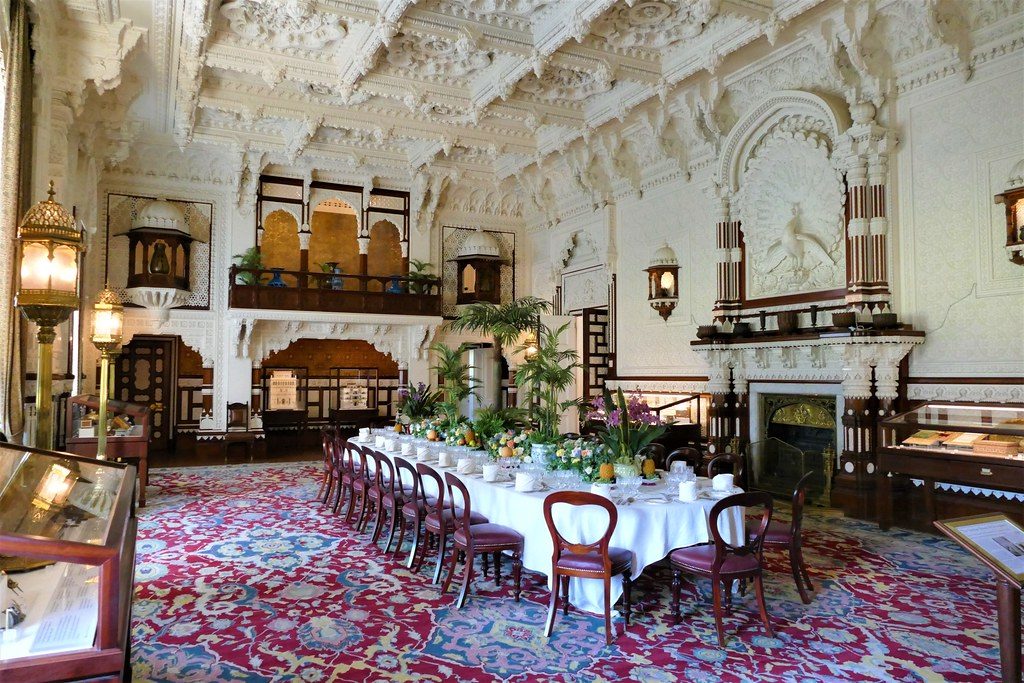
Added in 1890-91, this banqueting hall was designed by Lockwood Kipling and carved by Bhai Ram Singh in an elaborate Indian style to mark Queen Victoria's title of Empress of India. Every surface carries molded ornamentation, and its centerpiece cabinets still display diplomatic gifts sent from Indian rulers.
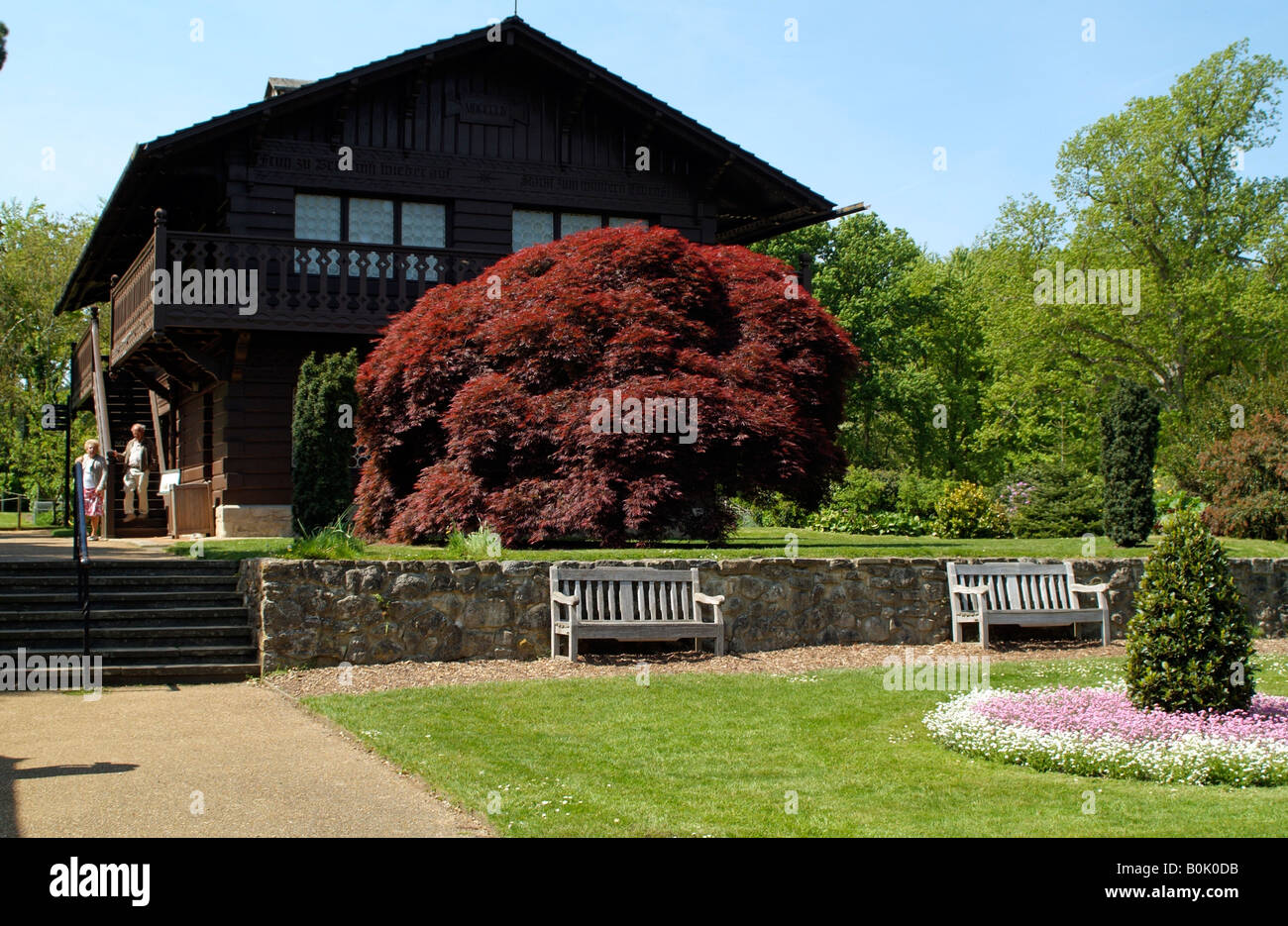
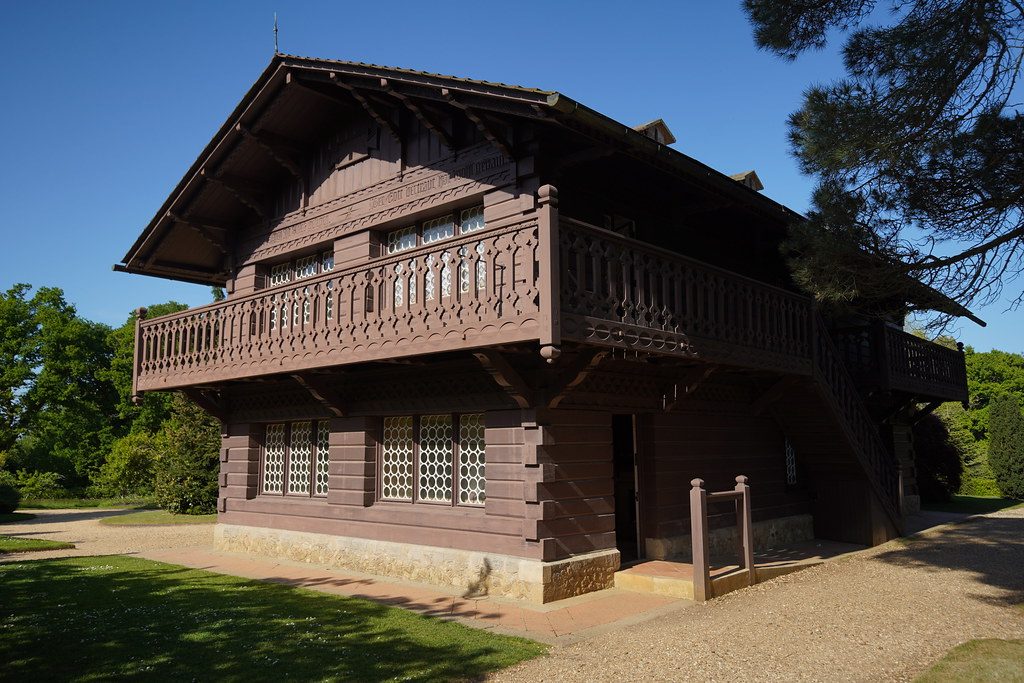
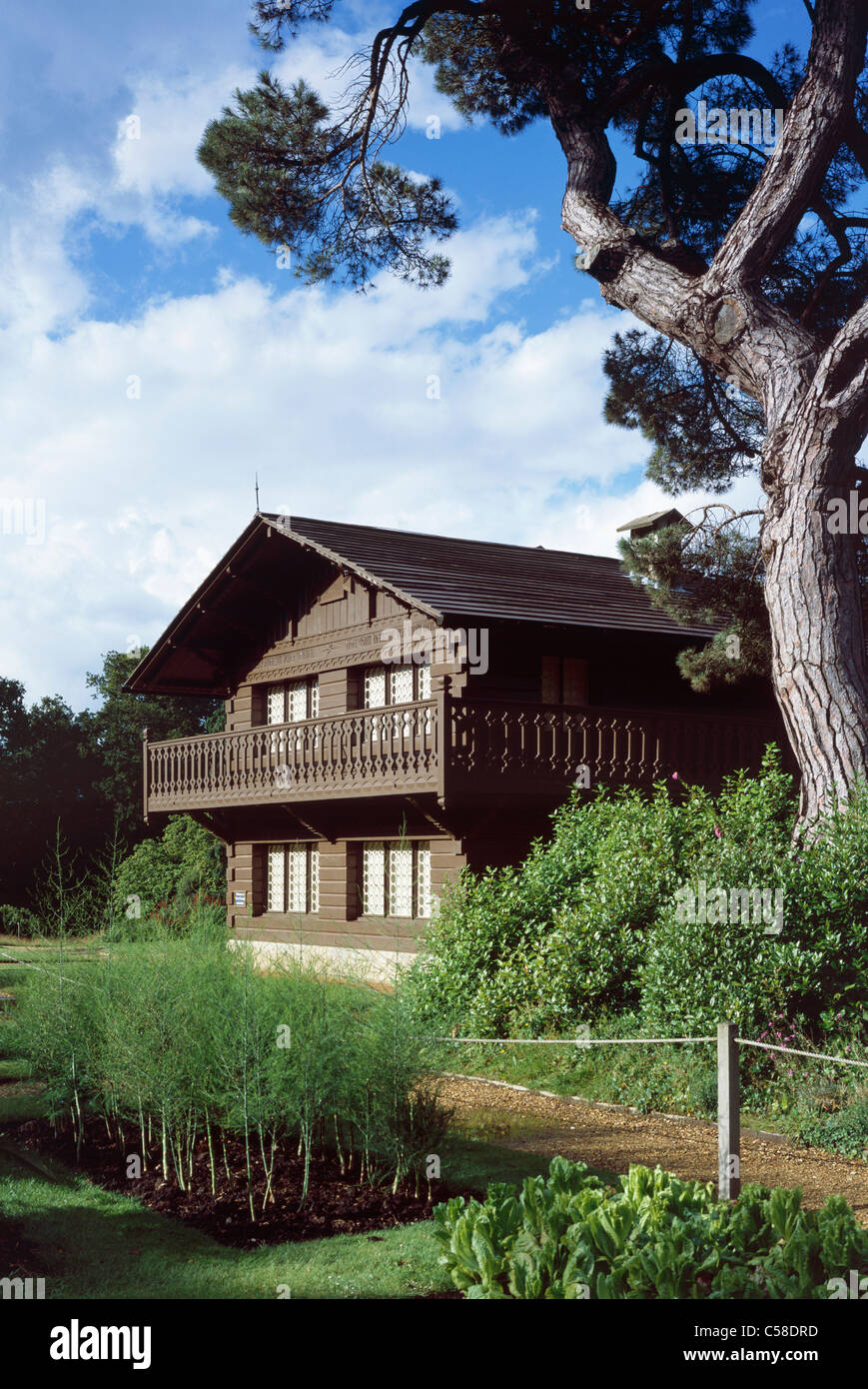
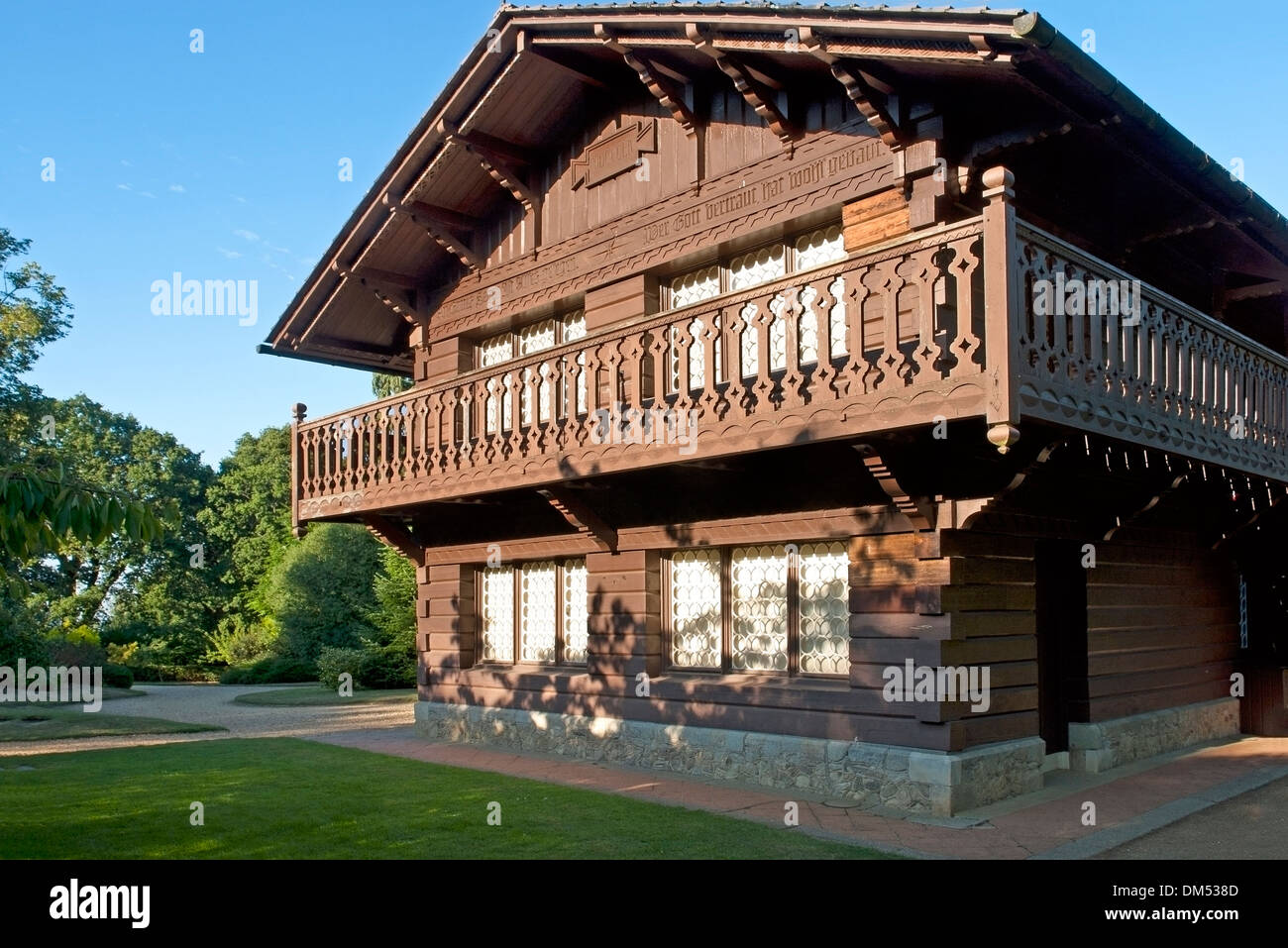
Built in 1853-54 as a scaled Alpine-style chalet, this timber cottage let Victoria and Albert's nine children learn cooking, gardening and housekeeping in miniature. A nearby museum, added in 1862, still holds the children's natural history collections.
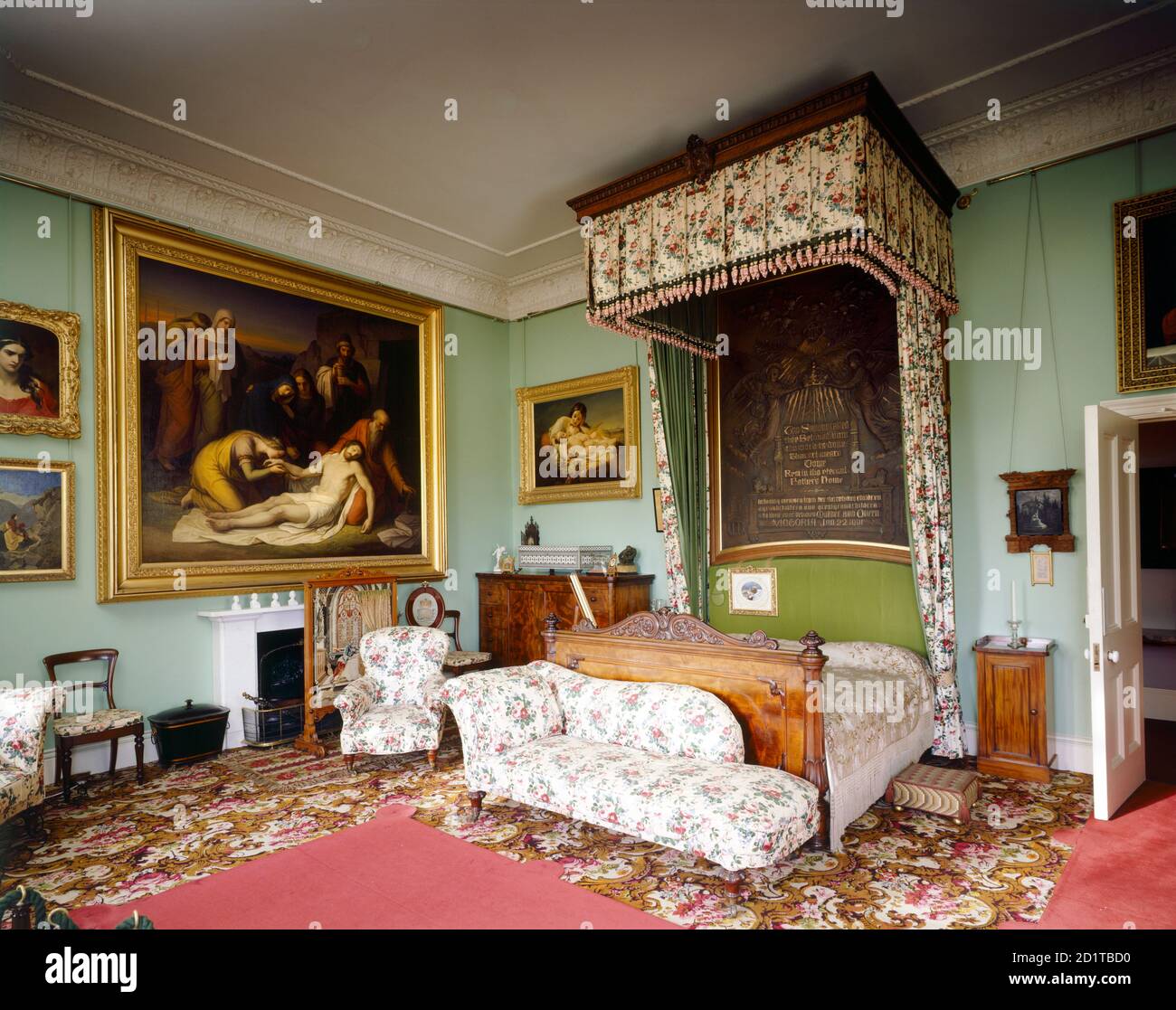
Preserved almost exactly as it stood in 1901, this room is where Victoria died on 22 January that year surrounded by family, including her grandson Kaiser Wilhelm II. It only opened to public visitors in 1955, more than five decades after her death.
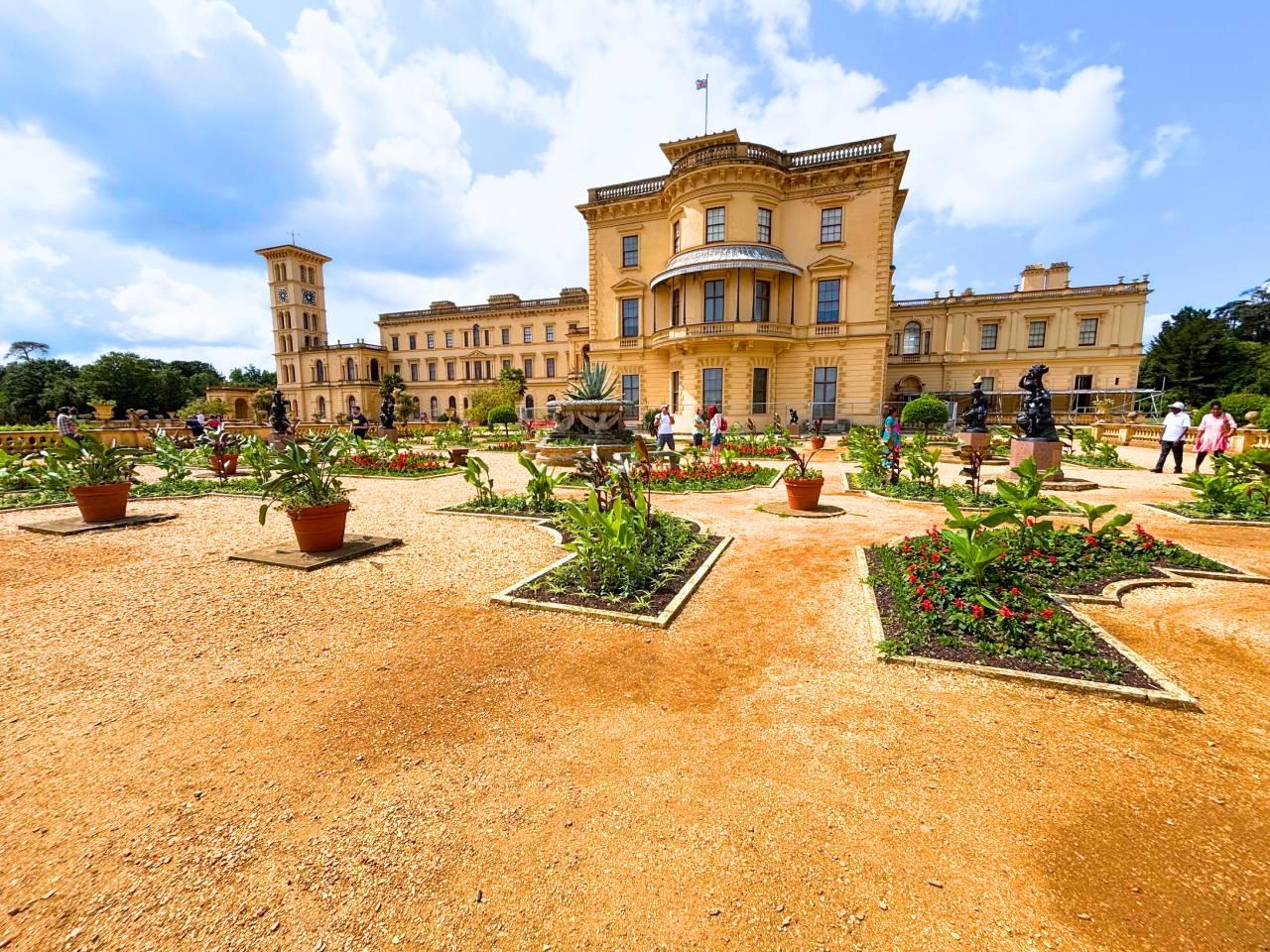
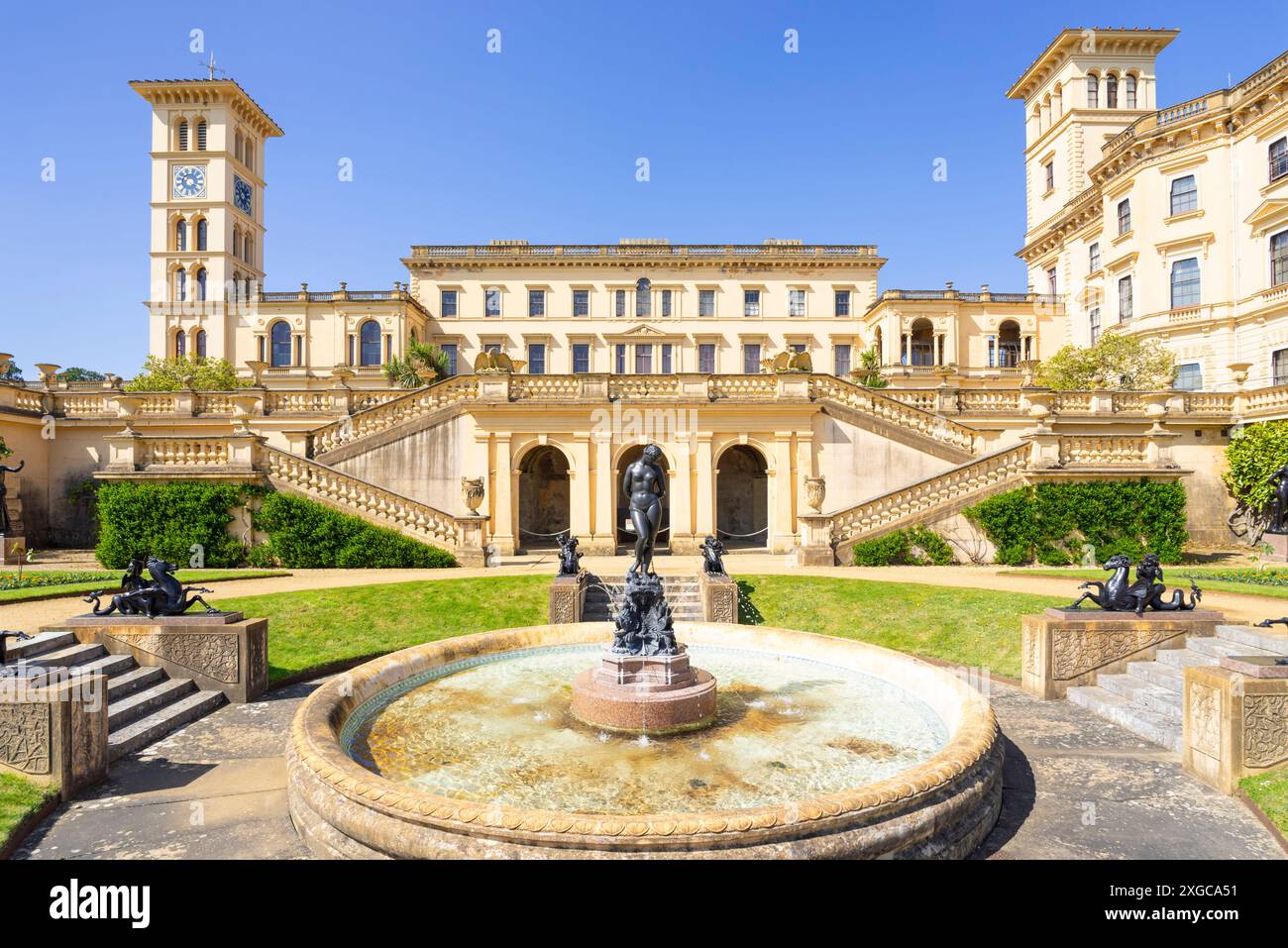
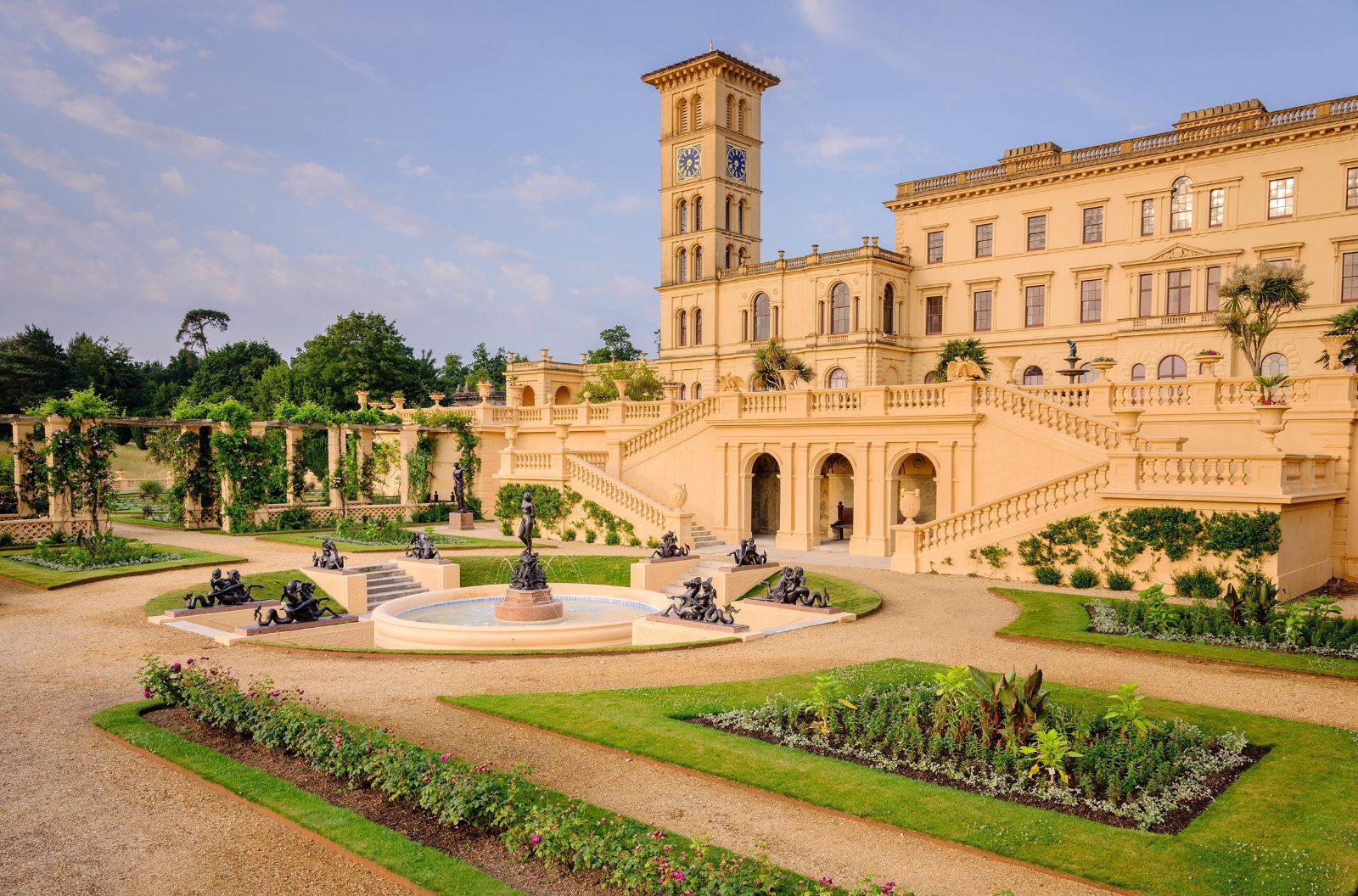
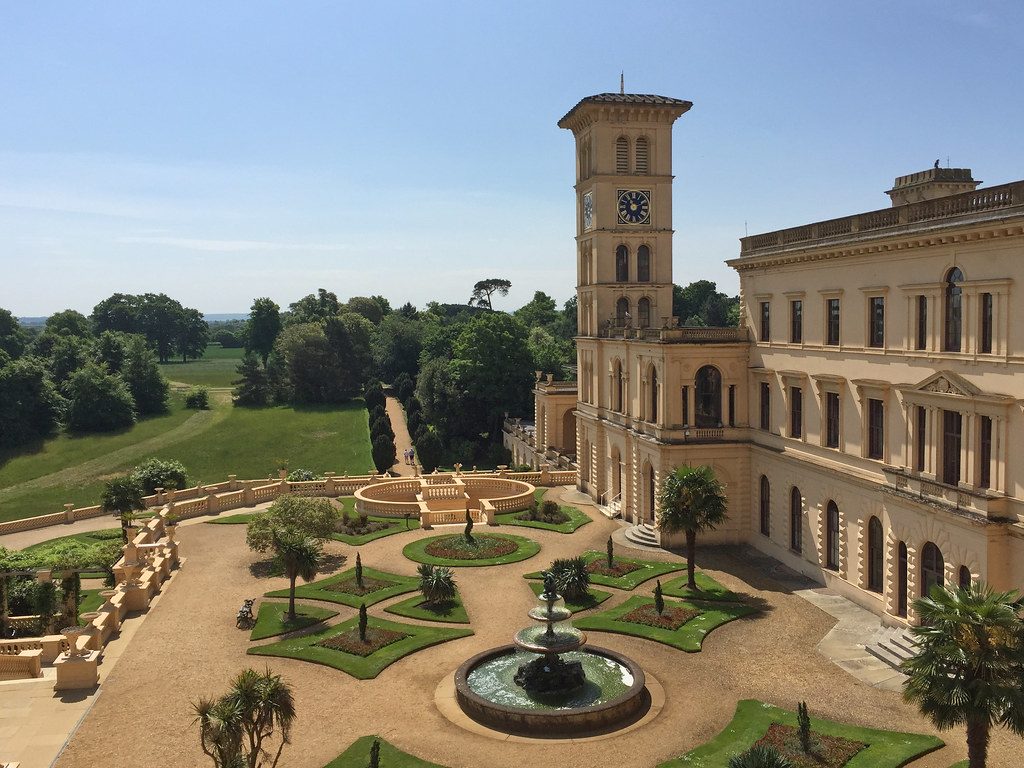
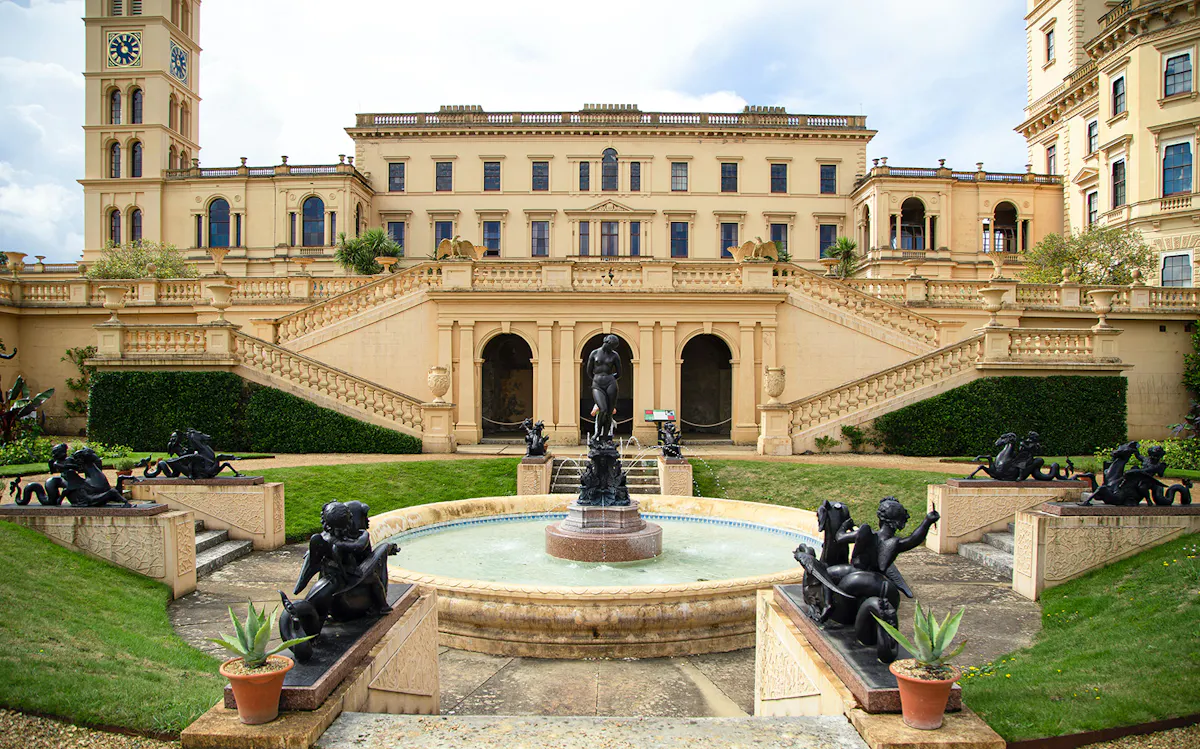
Designed with input from Prince Albert, these formal terraces descend toward the Solent in a style modeled on the villas of the north Italian lakes and Genoa. Statuary and clipped hedging line the pathways that Victoria walked daily during her stays.
Restored from Victorian planting records, this working garden originally supplied fruit and vegetables to the royal kitchens across a productive 19th-century layout. Seasonal displays now recreate the bedding schemes Victoria would have recognized.
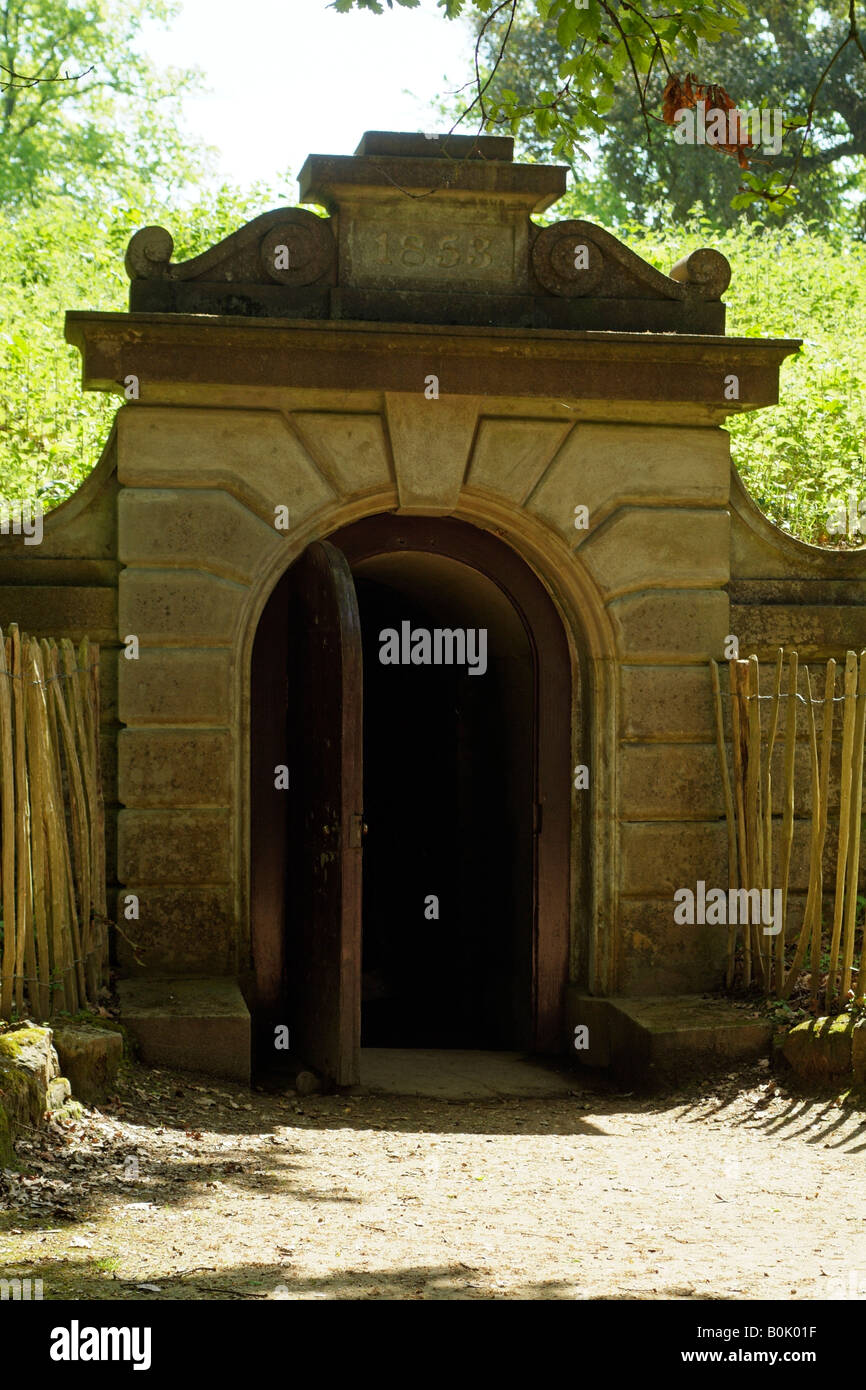
Tucked behind the main house, this 1846 structure predates the invention of mechanical refrigeration by several decades and was used to store ice gathered locally to preserve food and chill drinks year-round.
You come up York Avenue and the towers appear before the house does, two campaniles over a screen of cedar and holm oak. Doors open at 10:00, and arriving in that first hour puts you ahead of the coach groups that reach East Cowes mid-morning.
Your Osborne House Tickets tickets are scanned at the visitor entrance; adult on-the-day admission runs 27.5 GBP for house and grounds.
You start indoors while the rooms are still quiet. The Grand Corridor first, past marble busts and Winterhalter canvases. Then the Council Room, the Dining Room, and up to Victoria's bedroom, where you pause longer than you meant to. The Durbar Room takes the most time — you will want ten minutes for the ceiling alone, standing back near the doorway where the plasterwork resolves.
Outside, you drop through the terraces toward the Solent. Container ships slide past the balustrade. The shuttle runs down to the Swiss Cottage, or you walk it in about twenty minutes through the walked woodland; either way you end at the children's chalet, the miniature fort, and the small museum of shells and specimens. From there the path continues to the private beach, where Victoria's bathing machine sits on the shingle. Last entry is well before the 17:00 close, so you turn back up the hill with the light still on the stucco.
All the details about your upcoming adventure in one place
Osborne House Tickets grant access to the Italianate seaside palace Victoria and Albert built above the Solent, including the Durbar Room, the state and private apartments, and the terraced gardens that fall away toward the shore. Beyond the house itself, admission covers the walled garden, the Swiss Cottage children's chalet and museum, and the private beach with the Queen's bathing machine. Isle of Wight landmarks rarely combine royal interiors and coastline this closely, which is why East Cowes palace tour visitors often treat the estate as a full day out.
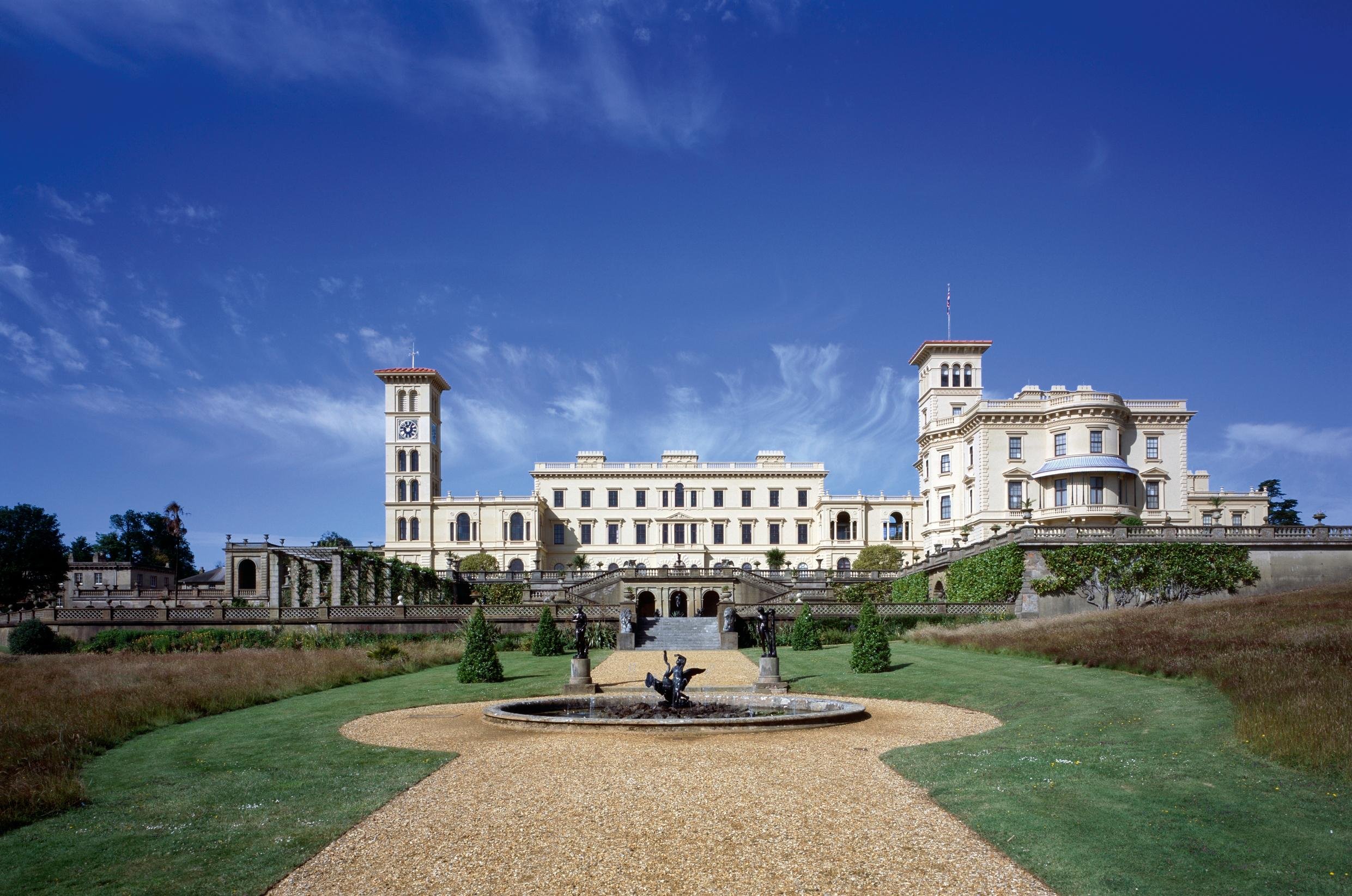
Prince Albert designed the belvedere towers himself, borrowing the proportions of a Neapolitan villa for a stretch of English coast where the light rarely obliges.
Osborne House Tickets grant entry to the result: a working royal retreat built between 1845 and 1851, sold to the nation by Edward VII in 1902, and never quite converted into a museum in the ordinary sense.
The house matters because it preserves domesticity rather than ceremony. Victoria and Albert bought the estate to escape Windsor and Buckingham Palace, and what survives at York Avenue is the private register of a monarchy that ruled a quarter of the globe. The Queen died in the bedroom on 22 January 1901, and the room remains arranged as it was. Nine children grew up across these floors. The scale is domestic; the detail is imperial.
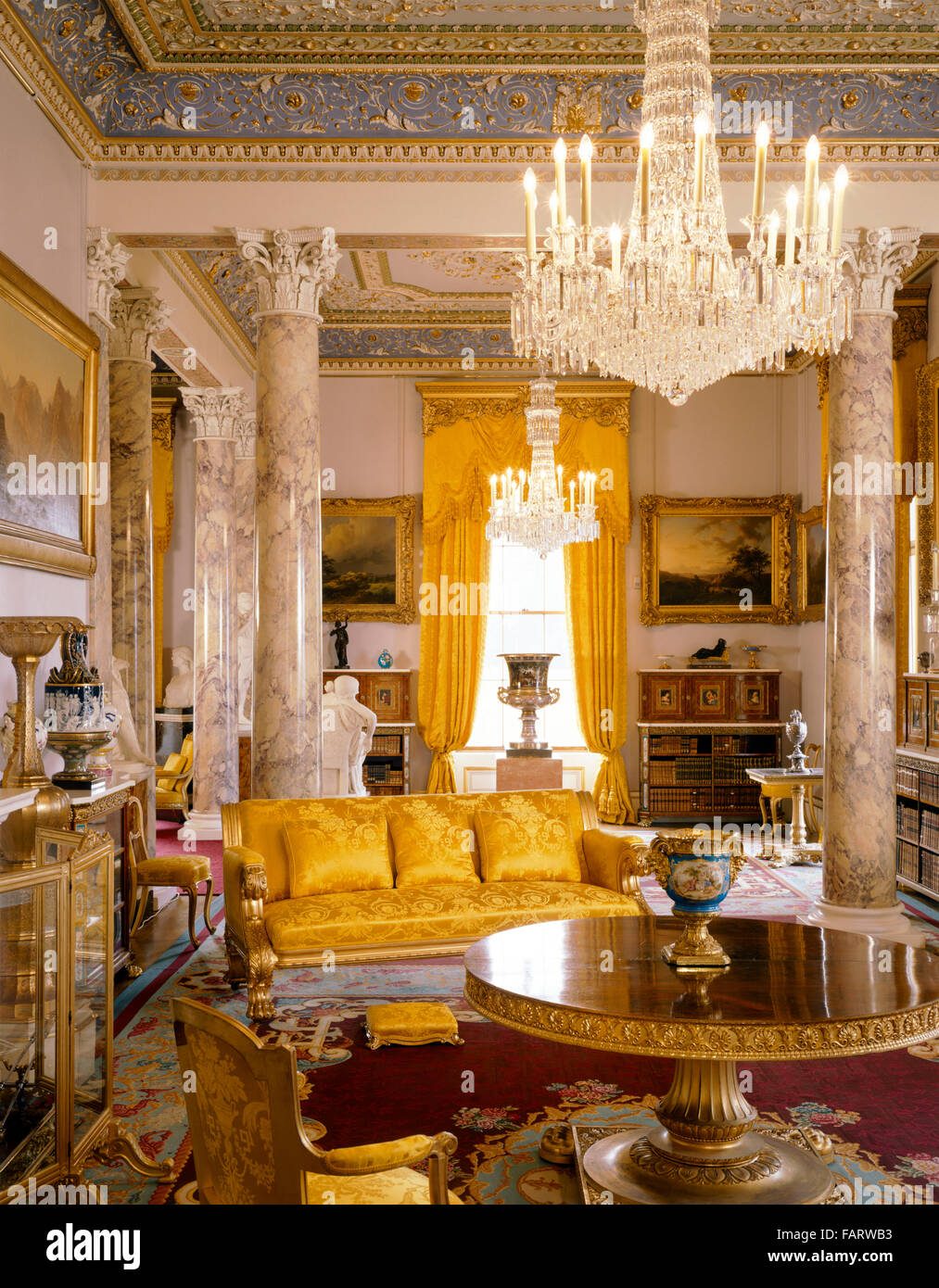
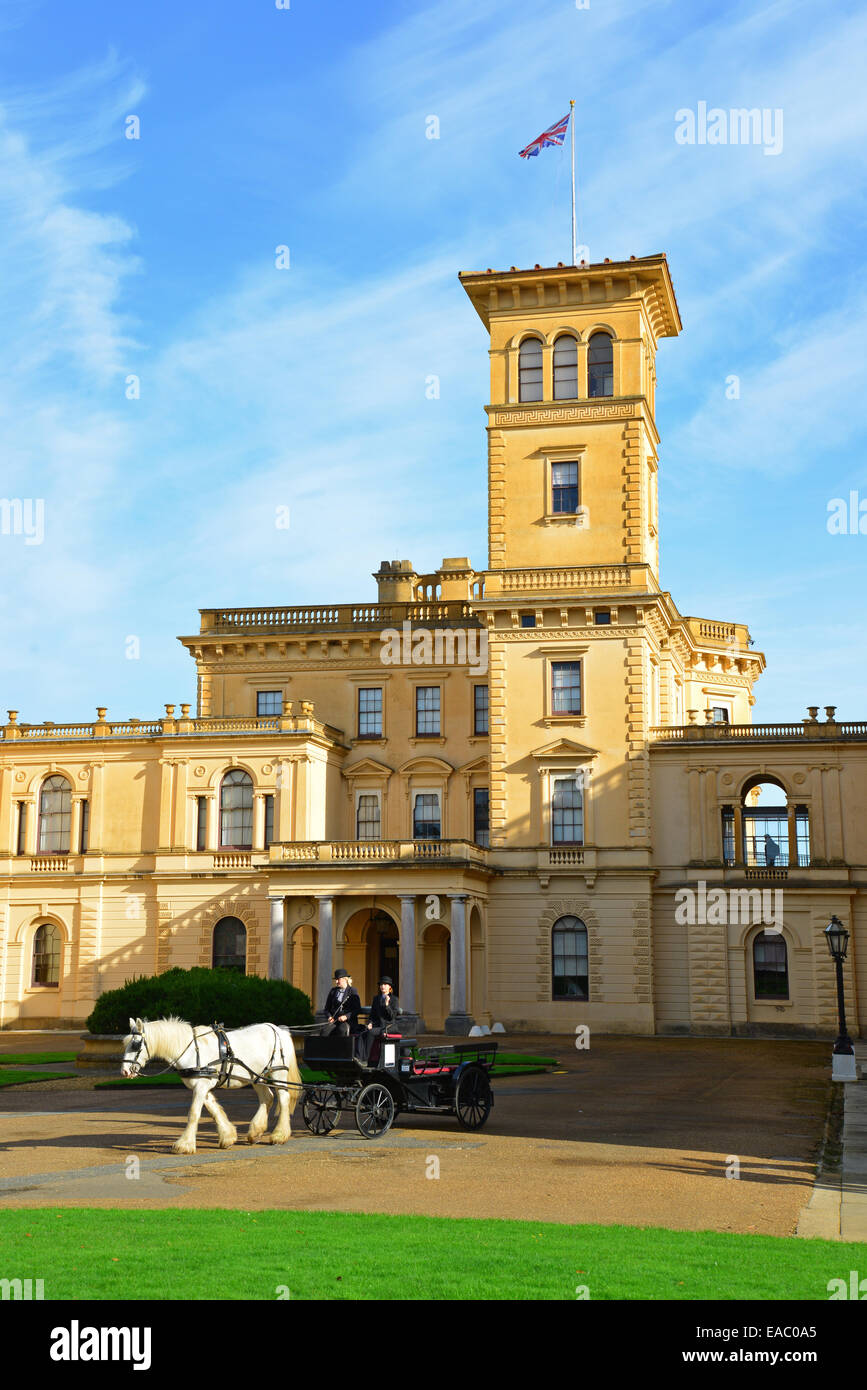
Architecturally, the building is a collaboration between Albert and the London builder Thomas Cubitt, who had already shaped Belgravia. Two campaniles rise above stuccoed wings — the Pavilion for the family, the Household Wing for the court. Inside, the Durbar Room of 1890 breaks the Italianate discipline entirely: a vast reception hall of white plaster carved in Punjabi style by Bhai Ram Singh, its peacock overmantel and interlaced ceiling designed as a statement about India and empire. The corridors hold Winterhalter portraits, marble limbs of the royal children cast as classical fragments, and Gothic Revival furniture Albert specified to the inch.
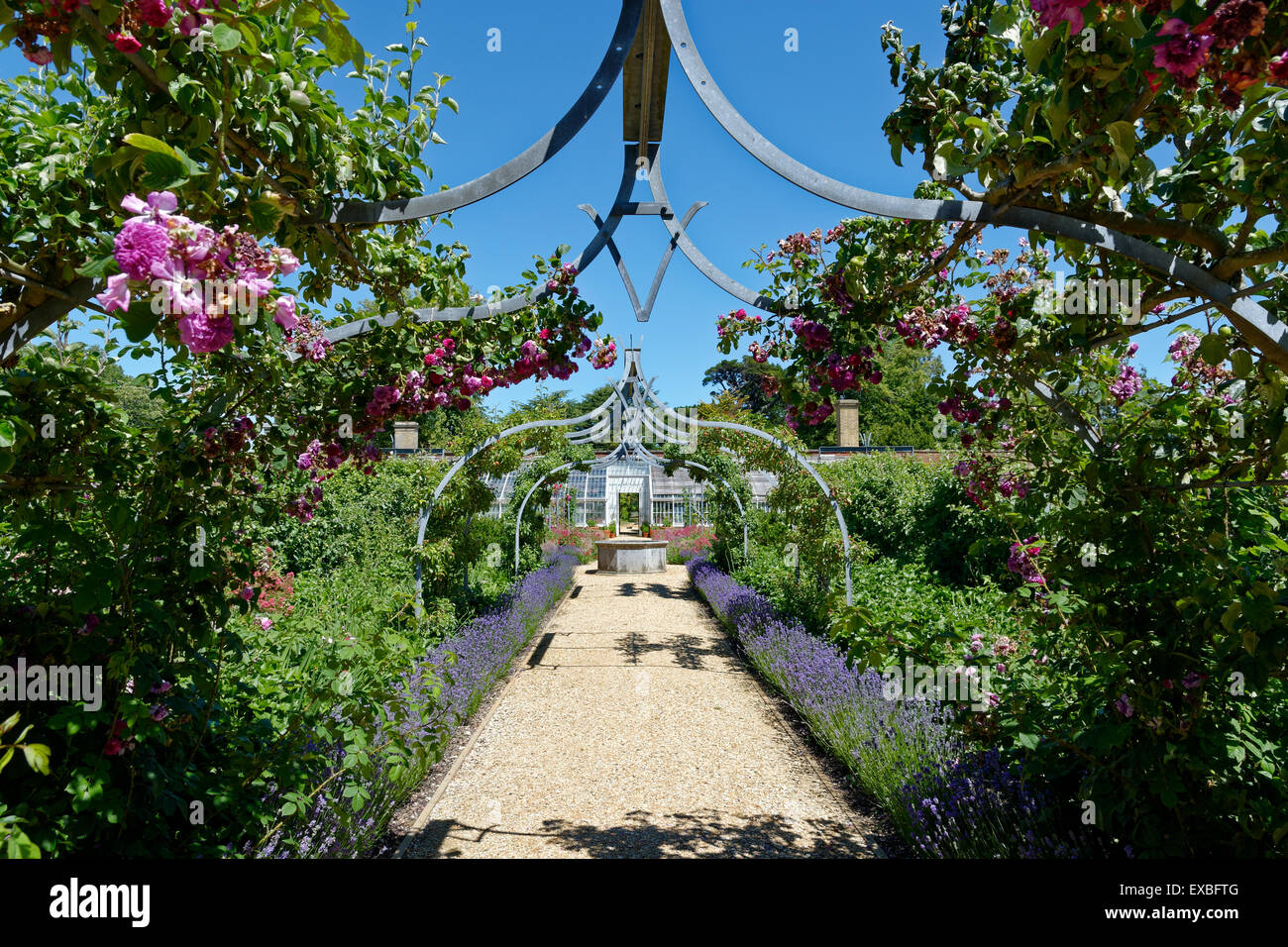
The grounds extend the argument. Terraced gardens step down toward the Solent in three levels of urns and clipped hedging. The walled garden still produces for the estate. Below, the Swiss Cottage — a timber chalet raised in 1854 — served as a schoolroom of practical economy where the royal children grew vegetables and sold them to their father at market rates. Nearby, Queen Victoria's private beach and bathing machine reopened to visitors in 2012 after more than a century of closure. English Heritage has cared for the property since 1984, and the estate now covers roughly 140 hectares of parkland, woodland walk and shoreline.
Osborne is best understood as a Victorian landmark that resisted becoming a monument. Its interiors were photographed obsessively during Victoria's lifetime, which is why restoration has been unusually exact. Visitors arriving on Osborne House Tickets tours find no velvet ropes around an idea of royalty, but a house that still smells faintly of wax and sea air, holding the objects of a family that lived here in earnest. Osborne House Tickets remain the only route into those rooms, and the Isle of Wight has no comparable survival.

The scale is domestic; the detail is imperial.
There is no formal dress code, but the State Rooms and Durbar Room involve walking on original 19th-century flooring and staircases, so flat, closed-toe shoes are recommended. Outdoor terraces and the walk to the walled garden and Swiss Cottage cross gravel paths and slopes, so weatherproof layers are sensible even in summer given the Solent coastal breeze.
Bags are subject to a visual check at the entrance to the house, and large rucksacks or suitcases should be left with your vehicle since there is no staffed cloakroom on site. Small daypacks are permitted inside the State Rooms but must be carried in front of you in narrow corridors to avoid contact with furniture and artworks.
Personal, non-flash photography is permitted throughout the State Rooms, Durbar Room and Swiss Cottage, but flash and tripods are not allowed to protect original textiles, wallpaper and artwork. Photography for commercial use requires prior written permission from English Heritage.
Children can explore the Swiss Cottage, its miniature fort and gardening plots, plus an interactive exhibition on the nine royal children who grew up at Osborne. Pushchairs are welcome across the estate, though the upper floors of the main house are stairs-only.
The ground floor of Osborne House, the Durbar Room and most garden terraces are wheelchair accessible via ramps, though the private apartments on the upper floors are reached by stairs only. A courtesy mini-bus and mobility scooters link the house, beach and Swiss Cottage for visitors unable to walk the estate's paths, and accessible parking and toilets are available near the visitor entrance.
Food and drink bought outside the site may not be consumed inside the State Rooms, Durbar Room or Swiss Cottage, but picnics are permitted on the lawns and beach areas of the grounds. Bottled water is allowed throughout the house for hydration, and any food waste must be taken to bins provided near the café and Swiss Cottage.
Coach groups tend to arrive after 11:00
Quieter than weekends
Busiest day of the week
Family groups peak in early afternoon
Open daily 10:00–17:00, last entry recommended by 15:30
location
Opening hours
10:00 – 17:00
Getting there
City-center access via metro and bus
Accessibility
Most experiences are wheelchair-friendly — check individual tours
What to bring
Comfortable shoes, water, phone for mobile voucher
Public transport · Roughly 1 hour 15 minutes from Southampton · Ferry plus bus fare, bus tickets from £3-5
Take the Red Funnel ferry from Southampton to East Cowes, then Southern Vectis bus 4 or 5 from Well Road, a journey of about 6-10 minutes.
Car · About 5-10 minutes' drive from the East Cowes ferry terminal · Ferry fare plus free on-site parking
From the mainland, drive onto the Red Funnel vehicle ferry at Southampton to East Cowes, then follow signs 1 mile southeast to Osborne House with on-site parking.
Bike · Approximately 10-15 minutes · No cost beyond ferry fare
Cycle from East Cowes ferry terminal along York Avenue directly to the estate entrance on mostly flat roads.
Taxi · Around 5 minutes from the ferry terminal · Metered fare, typically a short local trip
Local firms based in East Cowes can be booked to meet Red Funnel ferry arrivals for a direct transfer to the visitor entrance.
Tickets booked for Osborne House can be cancelled or amended up to 24 hours before the visit date for a full refund of the 27.5 GBP adult admission. Refunds are not available for no-shows or cancellations made after that window.
Recommended time
3-4 hours
Covering the house, Swiss Cottage, gardens and the private beach properly takes 3 to 4 hours, since the beach and cottage each sit a good 30-minute walk from the main house. Booking Osborne House Tickets for a slot between 10:00 and 12:00 lets you join the first house tours before coach groups and ferry parties arrive, keeping the state rooms comfortable rather than congested. Add extra time if you plan to picnic on the lawns or linger on the beach, and trim the itinerary to 2 hours if you're skipping the grounds and sticking to the house tour alone. Queues build steadily rather than all at once, so the gap between an opening arrival and a midday one is real and noticeable at the entrance gate.
Crowd levels through the day
Weather · crowds · average price — dots go green to amber to red as each metric rises.
Daffodils and rhododendrons bloom in the walled garden and around the Swiss Cottage. Crowds are lighter than summer and temperatures are mild.
Peak season with school holidays bringing the heaviest attendance, especially weekends and August. Terraces and beach areas are popular given typical highs of 20-23°C.
Gardens display late-season colour and visitor numbers drop noticeably after the summer break ends in early September. Cooler, changeable coastal weather is common.
Reduced opening on the ground floor and grounds only, with the full house closed for conservation work. Ideal for visitors seeking a quiet coastal walk rather than the full interior tour.
Reserve the 10:00 opening slot online in advance since timed entry tickets sell out on weekends and during the summer holidays.
Red Funnel to East Cowes followed by Southern Vectis bus 4 or 5 avoids parking search near the estate entrance.
Original staircases and gravel garden paths make trainers or flat shoes more practical than sandals.
From late October the ground floor and grounds operate on a reduced Wednesday-to-Sunday schedule, so confirm dates before travelling in autumn or winter.
Coastal breezes off the Solent make the terraces cooler than inland parts of the Isle of Wight even in July and August.
It sits away from the main house, so budget extra walking time or use the courtesy mini-bus if mobility is a concern.
On-site card payment is standard, but a little cash is useful for smaller garden stalls during events.
York Avenue, East Cowes, Isle of Wight, PO32 6JX
Main check-in point for timed admission slots
Get directionsOsborne House Estate, East Cowes, PO32 6JX
Courtesy mini-bus drop-off near the Swiss Cottage and beach
Get directionsQueen Victoria and Prince Albert bought the Osborne estate in 1845 from Lady Isabella Blachford. The couple wanted privacy. Buckingham Palace offered none, and Brighton's Royal Pavilion had been swallowed by the town. The old Georgian house on the site proved too small almost immediately. Albert turned to Thomas Cubitt, the London builder responsible for much of Belgravia, and together they designed a replacement in the Italianate manner. Albert reportedly compared the view across the Solent to the Bay of Naples. Two campanile-style towers rose above East Cowes. The Pavilion wing was completed in 1846; the larger Household Wing followed by 1851. What visitors on Osborne House Tickets tours encounter is a family home before it is a palace. The Swiss Cottage, erected in the grounds in 1854, was a working schoolroom where the royal children learned carpentry, cookery and gardening. Albert died at Windsor in December 1861, and Osborne became a place of mourning; his dressing room was kept as he left it. The Durbar Room, added in 1890 and designed by Bhai Ram Singh with advice from Lockwood Kipling, marked Victoria's role as Empress of India and remains the estate's most elaborate interior. Victoria died in her bedroom here on 22 January 1901, attended by her family. Edward VII had no affection for the place. In 1902 he gave Osborne to the nation. The main state rooms opened to the public in 1904, while the Household Wing became a convalescent home for officers, treating among others the poet Robert Graves and, later, A. A. Milne. A naval college occupied part of the estate from 1903 until 1921. Victoria's private apartments stayed closed for decades and were only unsealed to visitors in 1954, after which restoration slowly reversed years of institutional use. Anyone comparing Isle of Wight landmarks will find few with so complete a documentary record. English Heritage has cared for the site since 1984. The walled garden was replanted from Victorian plans in 2000, and the private beach with the Queen's bathing machine reopened in 2012 after more than eighty years' closure. Osborne House Tickets tickets admit visitors to house and grounds alike, and an unhurried Osborne House Tickets tour follows the same route the household once walked, from the terraces down to the sea.
Victoria and Albert purchase the Osborne estate from Lady Isabella Blachford.
Cubitt completes the Italianate Pavilion wing to Albert's design.
The Swiss Cottage is built in the grounds as a schoolroom for the royal children.
The Durbar Room is added, designed by Bhai Ram Singh.
Queen Victoria dies at Osborne on 22 January.
Edward VII gives the estate to the nation.
Victoria's private apartments open to the public for the first time.
The restored private beach and bathing machine reopen to visitors.
Step inside the Durbar Wing to frame the deeply coffered plaster ceiling and carved wall panels, designed by Bhai Ram Singh and modelled by Jackson and Company. Stand near the doorway to capture the full width of the room, from the banquet table to the ornate window bay opposite. This stop is often the highlight of Osborne House Tickets, so allow extra minutes before the room fills.
The Italianate terraces below the house give a layered view of clipped hedges, statuary and steps leading down toward the Solent. Shoot from the upper terrace looking seaward for the classic composition of garden and water together.
The gabled, timber-fretwork facade of this Alpine-style chalet stands apart from the main house and photographs well from the path facing its veranda. The recreated children's allotments alongside add rows of vegetables and miniature wheelbarrows to the foreground.
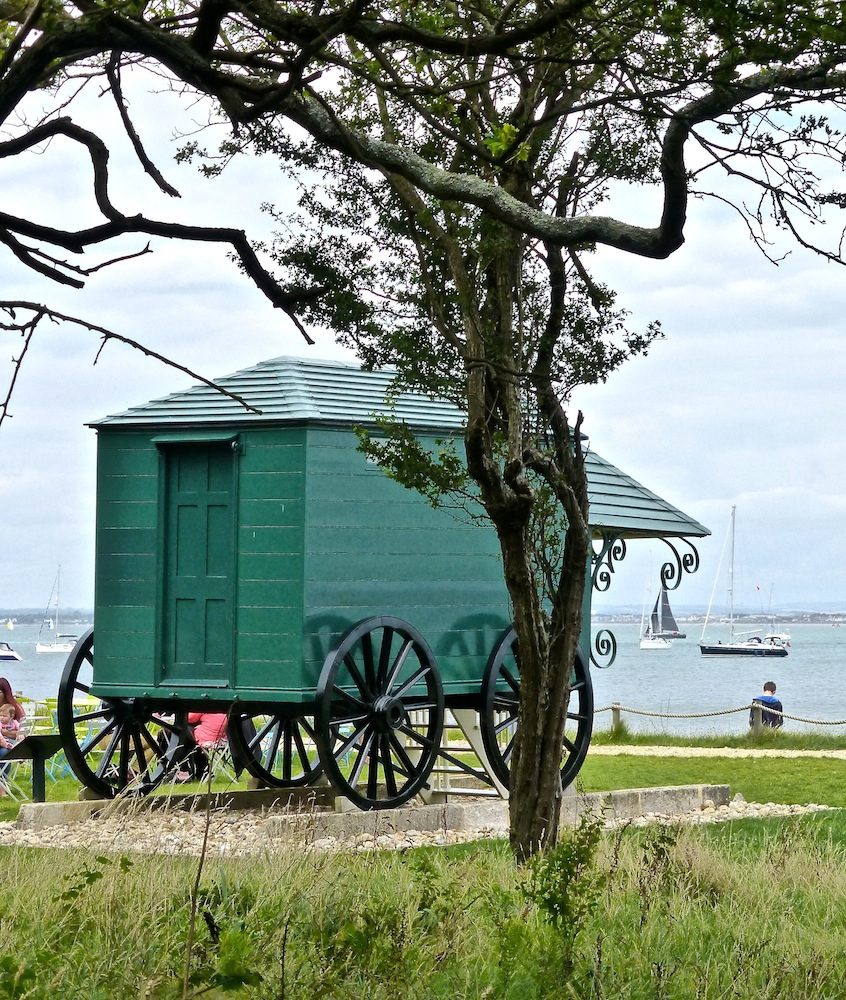
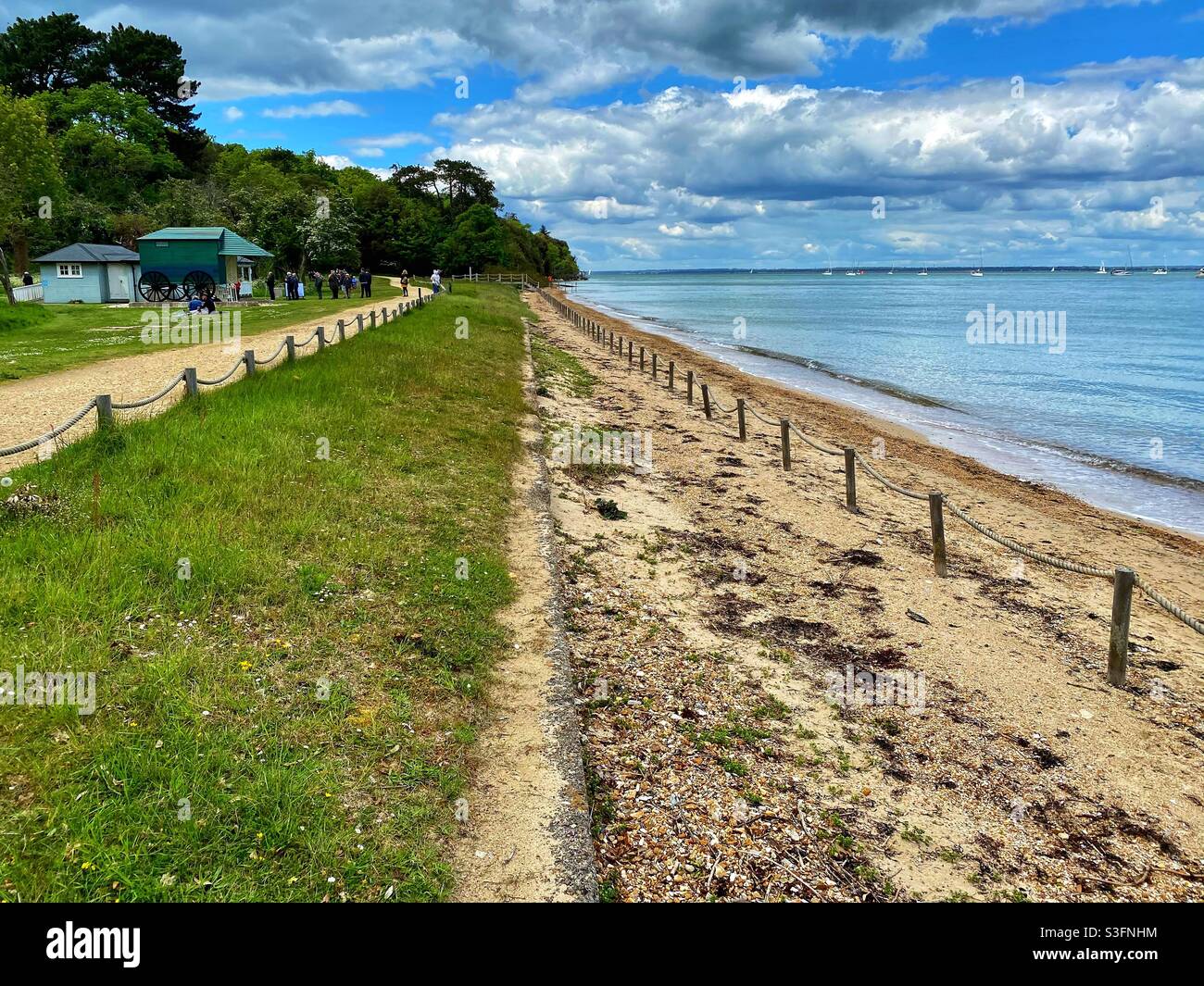
Queen Victoria's restored bathing machine sits on the shingle near the water's edge, with Portsmouth Harbour visible across the Solent. Photograph it side-on from the beach path to include both the machine's veranda and the sea beyond.
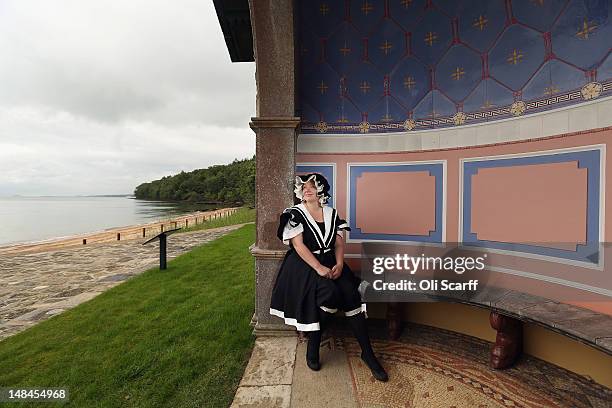
This small stone shelter above the beach frames a quiet sea view once used by the Queen for writing and sketching. Photograph from inside looking out, or from the path below looking up at the alcove itself.
Osborne House Tickets suit families well beyond the state rooms, since the estate is really two visits in one: a formal house tour and a woodland playground circuit built for children. Pacing the day around Swiss Cottage and the beach trail keeps younger visitors happy far longer than the house alone would.
Pushchairs go everywhere on the grounds but must be left at the entrance before the house tour, so bring a sling or carrier for that part. Free-standing pushchair parking is available near admissions.
Under-5s enjoy the two playgrounds and animal-carving trail more than the state rooms, while ages 7 and up get more from the Swiss Cottage exhibition on the nine royal children and its miniature kitchen and allotments.
Start at Swiss Cottage and its playground first while energy is high, let toddlers dig in the recreated vegetable allotments and miniature fort, then save the house tour for later once legs need a rest indoors rather than more walking.
Baby changing and toilets sit at admissions, the house, Swiss Cottage, and the beach café, so a family Osborne House Tickets tour rarely needs a long walk back to find one.
The wooded route from Swiss Cottage down through the Rhododendron trail to the private beach is flat, shaded, and short enough for tired legs, making it a natural cooldown after the miniature fort and allotments.
Swiss Cottage's indoor museum and the house's ground floor rooms give shelter, though the playgrounds and adventure trail are best saved for a dry spell if one of these skip-the-line Osborne House visits falls on a wet day.
Dining at Osborne House is entirely on-site, so anyone booking Osborne House Tickets can plan meals around five named spots rather than hunting for restaurants in East Cowes.
Homemade baguettes, cakes and hot drinks in a light-filled 1850 orangery. Busiest right after opening and around midday with arriving coach groups. Good for a quick pastry before or after Osborne House Tickets tours begin.
Set in the former Prayer Room turned theatre, this is the spot for a proper lunch or a full afternoon tea. Tables fill quickly between 12:00 and 14:00, so an early or late sitting suits an Osborne House Tickets tour that starts at opening. Booking ahead for afternoon tea is worthwhile.
A relaxed, all-year café near the entrance serving light lunches, sandwiches and hearty snacks. Open to everyone, including non-ticket holders, and a reliable fallback when other outlets close for events. Dogs are welcome in its seating areas.
A small seasonal stand near the children's play area dishing out homemade cakes and coffee. Handy for a short break partway round the grounds rather than a full meal. Only open in the warmer months.
Down by the private beach, this kiosk serves ice cream, cold drinks and light snacks with sea views. Best treated as a reward stop after the walk down from the house rather than a lunch venue. Queues build on sunny afternoons.
Real experiences from real travelers
We picked up our Osborne House Tickets at the gate on a warm Thursday morning and had the terraces almost to ourselves before ten. The Durbar Room ceiling is far bigger overhead than photos suggest, all that white carved plaster catching the light from the tall windows. Wear something with grip — the garden paths run downhill toward the water.
Rain came in sideways off the Solent and the state rooms were still a pleasure, warm and quiet with the smell of old carpet and wax. Prince Albert's fingerprints are on everything, from the campanile towers to the way the windows frame the sea. The shuttle down to the beach saved my knees.
The estate is much larger than expected and walking between the main house, Swiss Cottage and the shore took real effort in the heat. Our Osborne House Tickets tour guide was patient and knew small details about the royal children's garden plots. Bring water, the drinking fountains were few.
Standing on the private beach at low tide with the bathing machine behind you is a strange, quiet feeling — the Isle of Wight landmarks tend to be grand, and this one is oddly domestic. Sunlight on the water at around six in the evening was the best of the day. Boat traffic across to Portsmouth kept my kids watching for ages.
We arrived on the first genuinely warm day of the year and the terraced gardens were full of birdsong and cut-grass smell. Osborne House feels less like a museum and more like a home someone stepped out of. The Andromeda fountain is smaller in person but the detailing rewards a close look.
Booked skip-the-line Osborne House entry for a grey February morning and walked through the state apartments with barely another soul in sight. Cold stone underfoot, low sun coming through the sash windows at an angle you never see in summer photos. Staff were happy to talk rather than just point.
The children's chalet in the grounds turned out to be the part I remember most, dark timber and tiny cupboards and a miniature fort out the back. Our Osborne House Tickets tickets covered the whole estate which we hadn't realised, so we stayed far longer than planned. The walk back uphill in June sun is honest work.
Mist sat over the Solent until midday and then lifted to show the whole channel from the balustrade. The Casa Osborne, as my wife kept calling it, has a warmth the bigger palaces lack. Photography without flash was fine in most rooms.
Getting to East Cowes takes planning but the estate rewards it, particularly the walled garden and the view down to Osborne Bay. Rooms are dimly lit to protect the fabrics, which is understandable but makes some detail hard to read. Coming off the ferry we found the signage to the entrance clear enough.
Midsummer evening light on the campanile towers turned the render a deep gold, and the terraces stayed warm long after the crowds thinned. Buying Osborne House Tickets in advance meant no queue at the gate, which mattered on a busy Saturday. The gravel is loud underfoot and somehow that adds to it.
Everything you need to know for your journey
Osborne House is open daily from 10:00 to 17:00, and Osborne House Tickets bought online cover both the house and grounds.
Wheelchair users can access the ground floor, Durbar Room and most garden terraces via ramps, though the private apartments upstairs are reached by stairs only.
Small daypacks are permitted inside, but large rucksacks and suitcases should be left with your vehicle since there is no staffed cloakroom.
Non-flash photography is allowed throughout the State Rooms and Swiss Cottage; flash, tripods and selfie sticks are not permitted indoors.
Weekday mornings in spring and early autumn see the lightest attendance, while arriving for the 10:00 opening on any day helps you reach the State Rooms ahead of coach groups.
There is no formal dress code, though flat, closed-toe shoes are recommended for the original staircases and gravel garden paths.
Picnics are welcome on the lawns and beach, but food and drink from outside cannot be consumed inside the State Rooms or Swiss Cottage.
Take the Red Funnel ferry from Southampton to East Cowes, then Southern Vectis bus 4 or 5 to the estate, a total journey of roughly 15-20 minutes from the ferry terminal.
Yes, children can explore the Swiss Cottage, its miniature fort and gardening plots, plus an interactive exhibition on the royal children who grew up at Osborne.
Osborne House Tickets can be cancelled or changed up to 24 hours before the visit date for a full refund of the entrance fee.
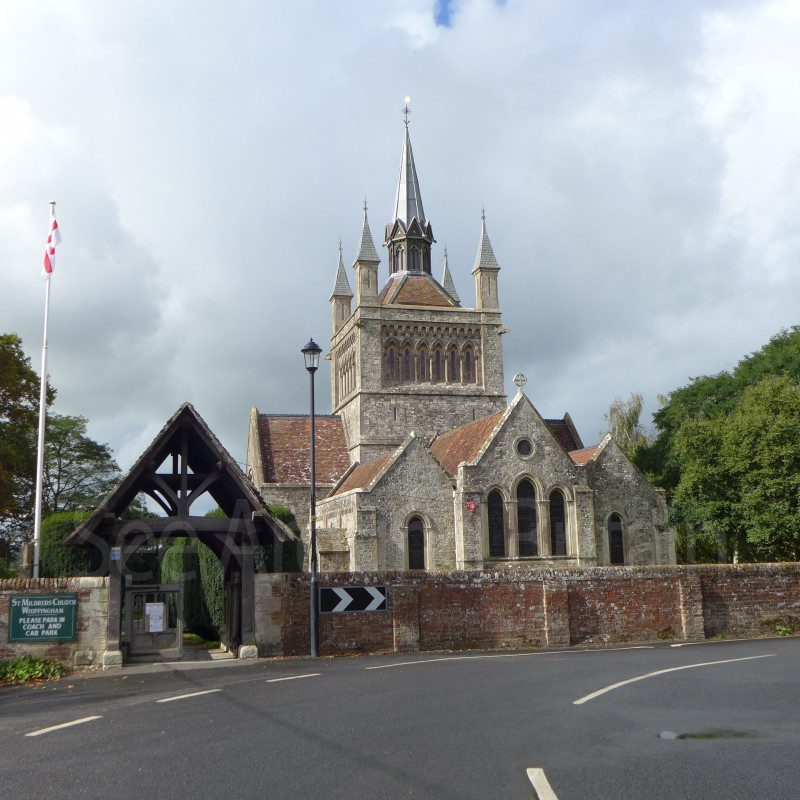
Whippingham Church, Norris Castle and the town of East Cowes with its Red Funnel ferry terminal are all within a 15-minute walk or drive.
Adult on-the-day admission to the house and grounds is 27.5 GBP.
A private Gothic Revival estate visible from parts of the Osborne grounds, built in the early 1800s overlooking the Solent.
Small town adjacent to the estate with guesthouses and B&Bs within walking distance of the ferry terminal.
Join thousands of happy travelers who have discovered this incredible experience
Book Your Experience Now